“What Holds, What Breaks” brings together nine artists whose practices center on materials and processes that embody resilience and fragility in equal measure. Through painting, printmaking, textiles, digital media, photography, and installation, they explore how materials behave at breaking points, how meaning shifts under stress, and how creative acts can serve as both documentation of collapse and blueprints for reconstruction.
Working through acts of layering, piecing, making, marking, and unmaking, the artists investigate the tensile strength of forms under pressure. What endures? What crumbles, shatters, or snaps? And what emerges in the spaces between stability and collapse?
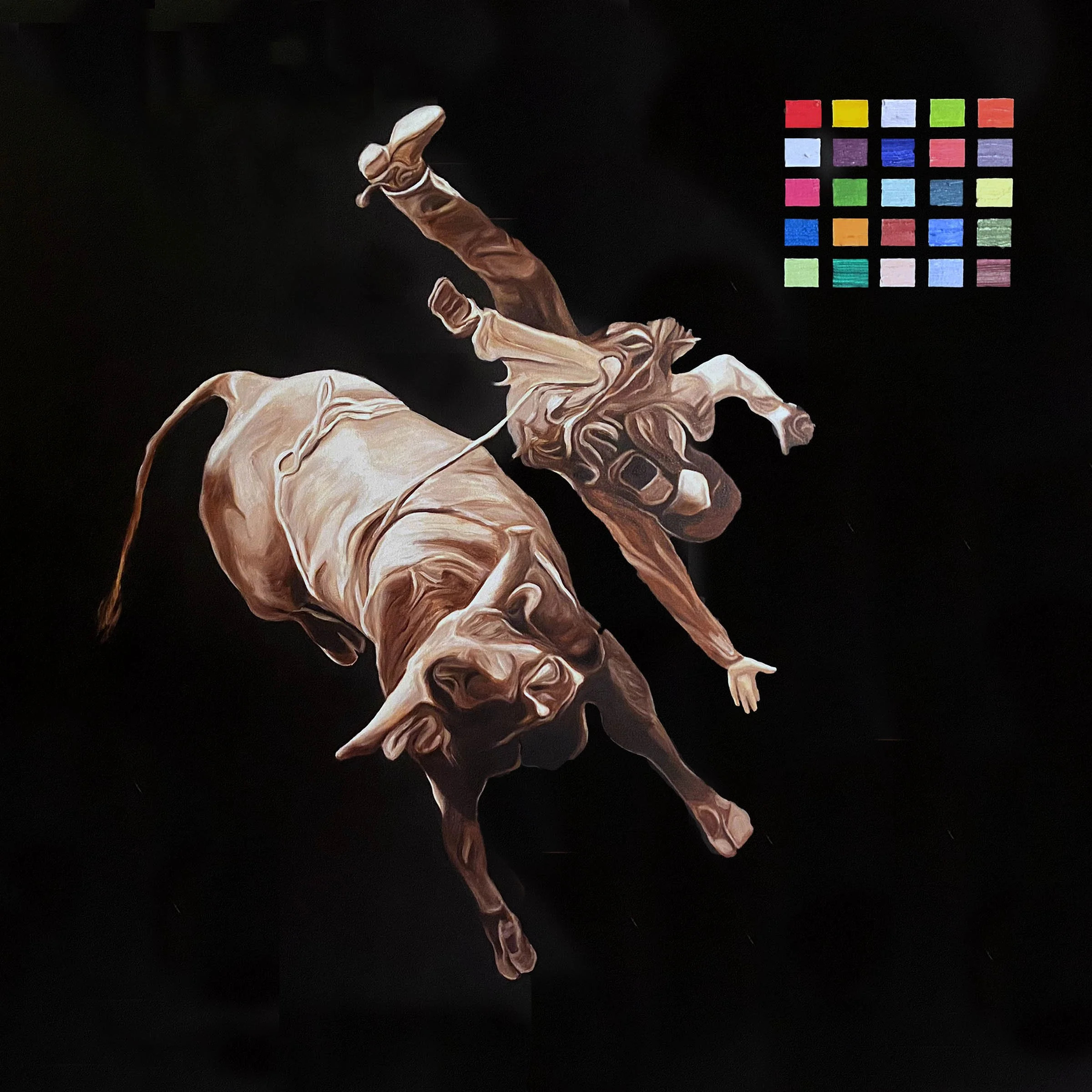
Julie Jablonski’s sepia-toned cowboys and horses, icons of American self-reliance, melt into abstraction as they fall through white or black space. The heroic myth disintegrates under the weight of our current moment, but something else emerges in its place: hard-edged grids of saturated color. The stubborn materiality of paint remains, insisting on form, even as narrative collapses.
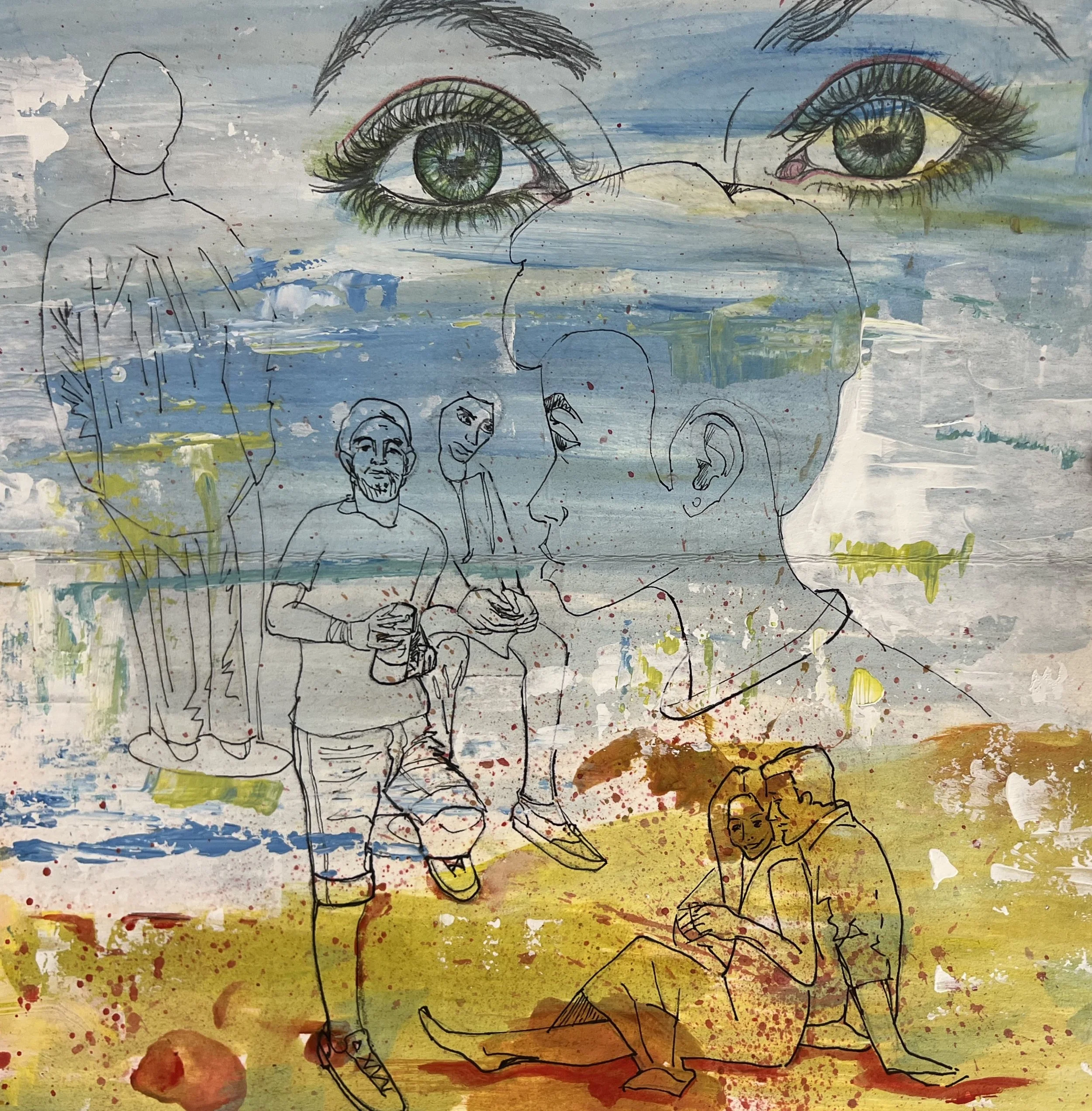
Niki Brisnovali-Grillakis’ Rumor to Truth traces an intricate narrative through a range of mediums — vellum, thread, pencil, watercolor, printouts. The work draws from her childhood in an intimate, but cliquish Greek island community. Its format, an accordion book, is an endless loop that mirrors how gossip travels across digital and physical spaces. The fragmented figures across color fields give a sense of duality, of trying to conjure memory from incomplete evidence, dissolving the distinction between truth and fabrication.
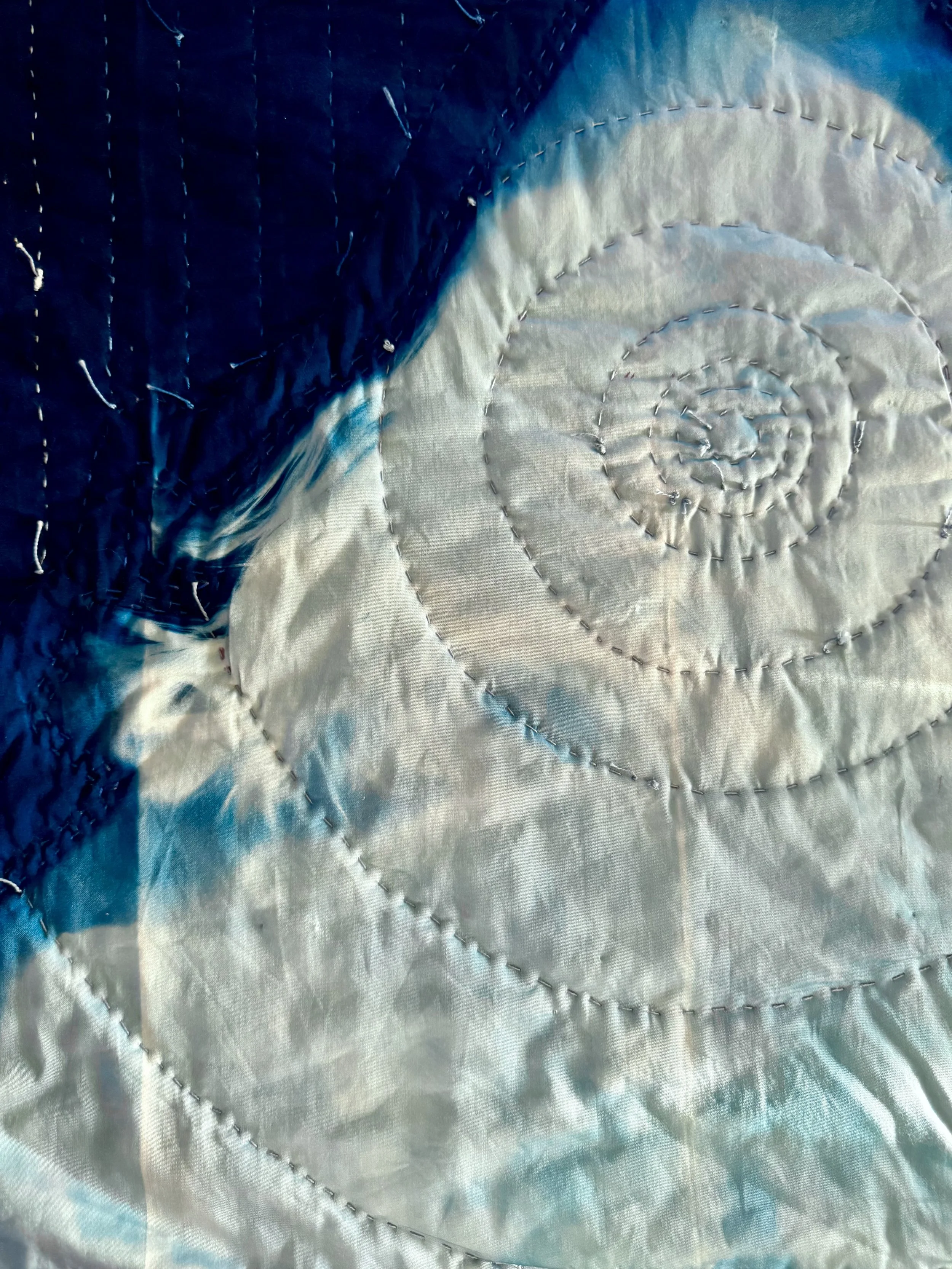
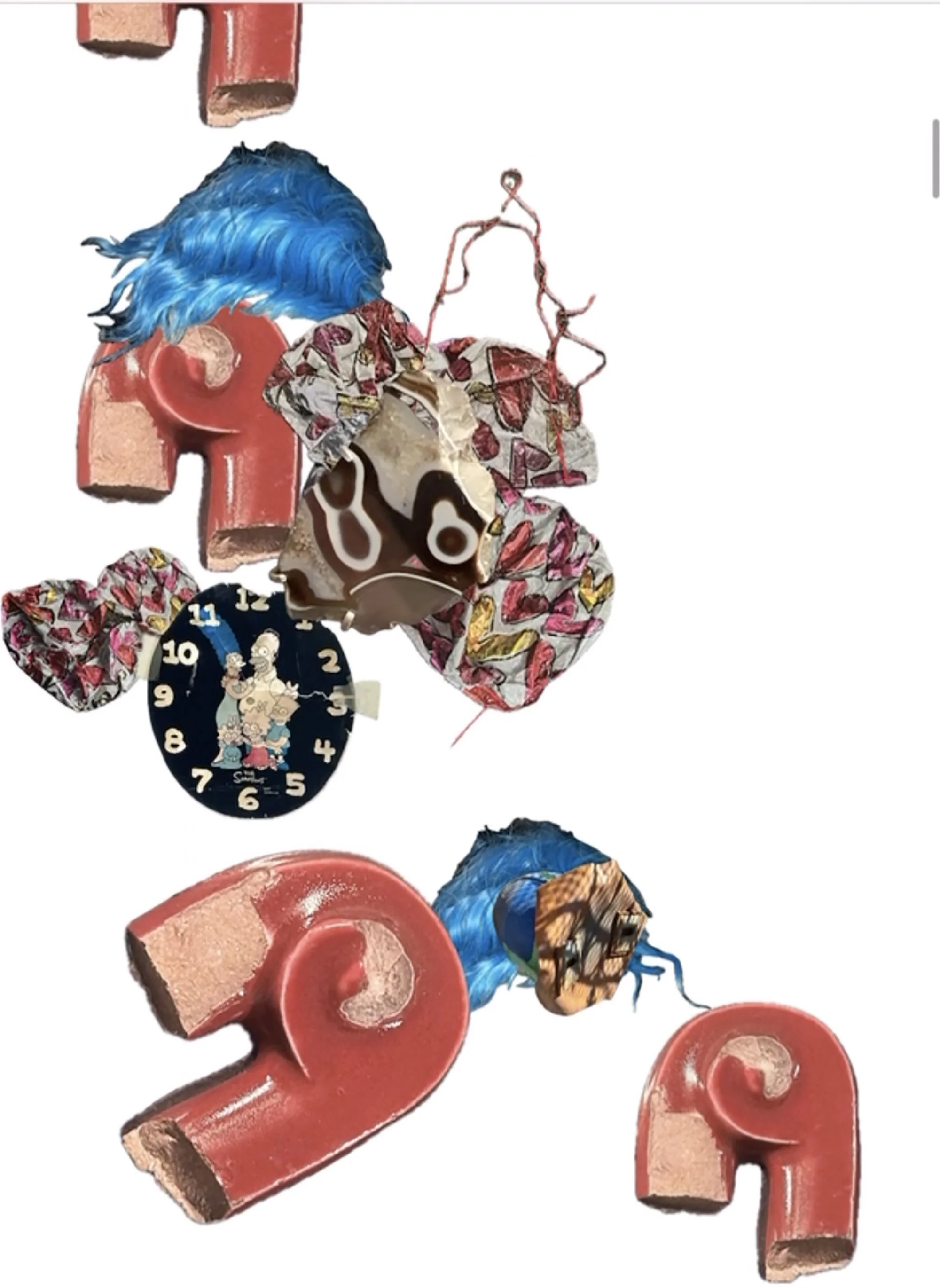
Anna Gordy pieces together cyanotype prints, and embellishes them with human hair and embroidery to create her textile work, Re-Membering Myself. The title conjures both memory and dismemberment, the ongoing work of reassembling a self from pieces that refuse to fit together cleanly.
Em Koch's paintings consider monumental time as a source of comfort and inspiration, finding solace in processes that dwarf human anxiety. Her detailed root drawings map the invisible infrastructure of visible growth. In her diptych The wolf that started a civilization, and the civilization that ended the wolf, she explores the cyclical nature of creation and destruction through mythic imagery. On one panel, the black silhouette of the wolf mother nurses twins Romulus and Remus. Below, the earth-brown foundation suggests both den and origin. In the second panel, a lone wolf straddles a geometric landscape of human construction. The wolf's isolation speaks to the paradox of progress: the mythic mother who founded Rome becomes, through civilization's success, an impossibility within it. We celebrate wildness even as our progress systematically destroys it.
Talia Steinman's to scroll & to stroll is an iterative digital work where play becomes a form of inquiry. Engaged in call-and-response with materials and imagery, Steinman has made a seemingly infinite scroll of stickers that build off one another like overgrown plants from another planet. Excess becomes method.
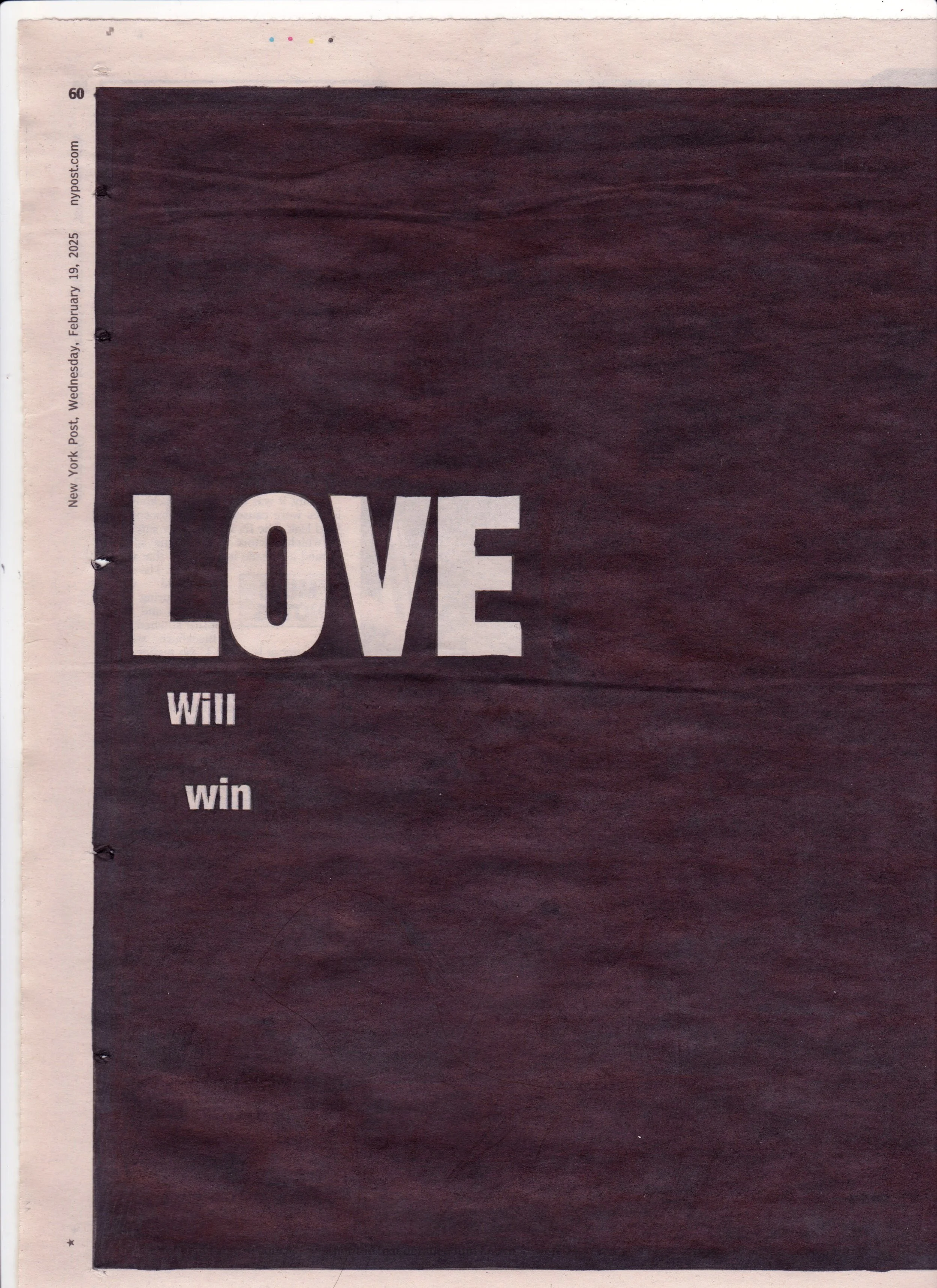
In sharp contrast, Richard Montañez uses marker-on-newspaper, blacking out text and breaking up words to create simple, declarative phrases: BREAK F a s c i s m; LOVE Will win. Written over inflammatory articles from The New York Post, the works suggest that resistance requires returning to fundamentals. What holds is the human capacity for moral clarity even in degraded conditions. What breaks is any pretense that political language still means what it claims to mean.
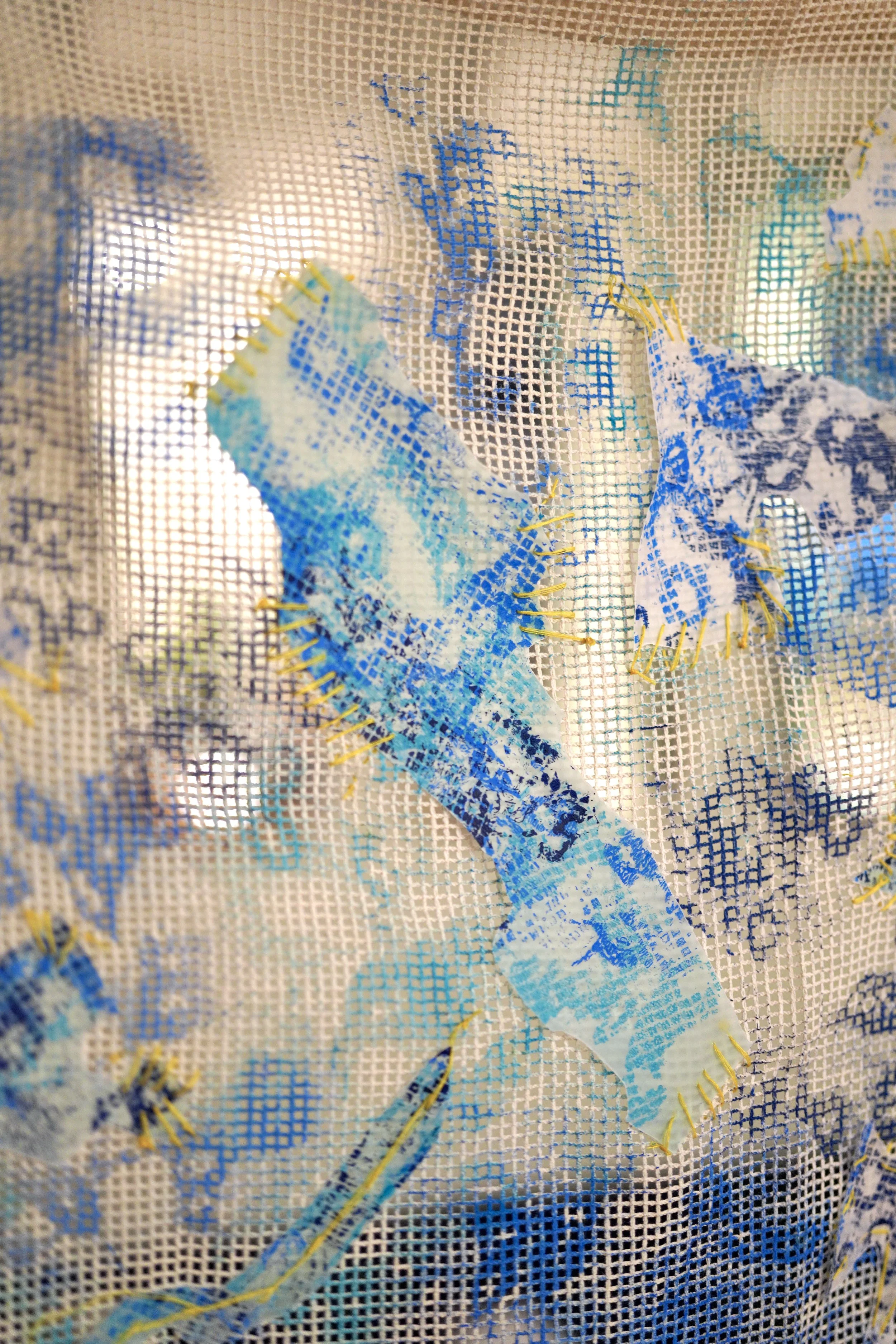
Artemis Lyu’s hanging installation of gelatin prints on transparent fabrics filters both vision and meaning. Within her process, repetitive labor yields unpredictable impressions. It becomes a devotional practice, methodical and ephemeral. The works create a delicate balance between structure and dissipation; we can't locate the image on a single plane. The individual gesture holds but becomes distorted, as if the material process itself sublates the certainty of any single mark into something more complex and layered.
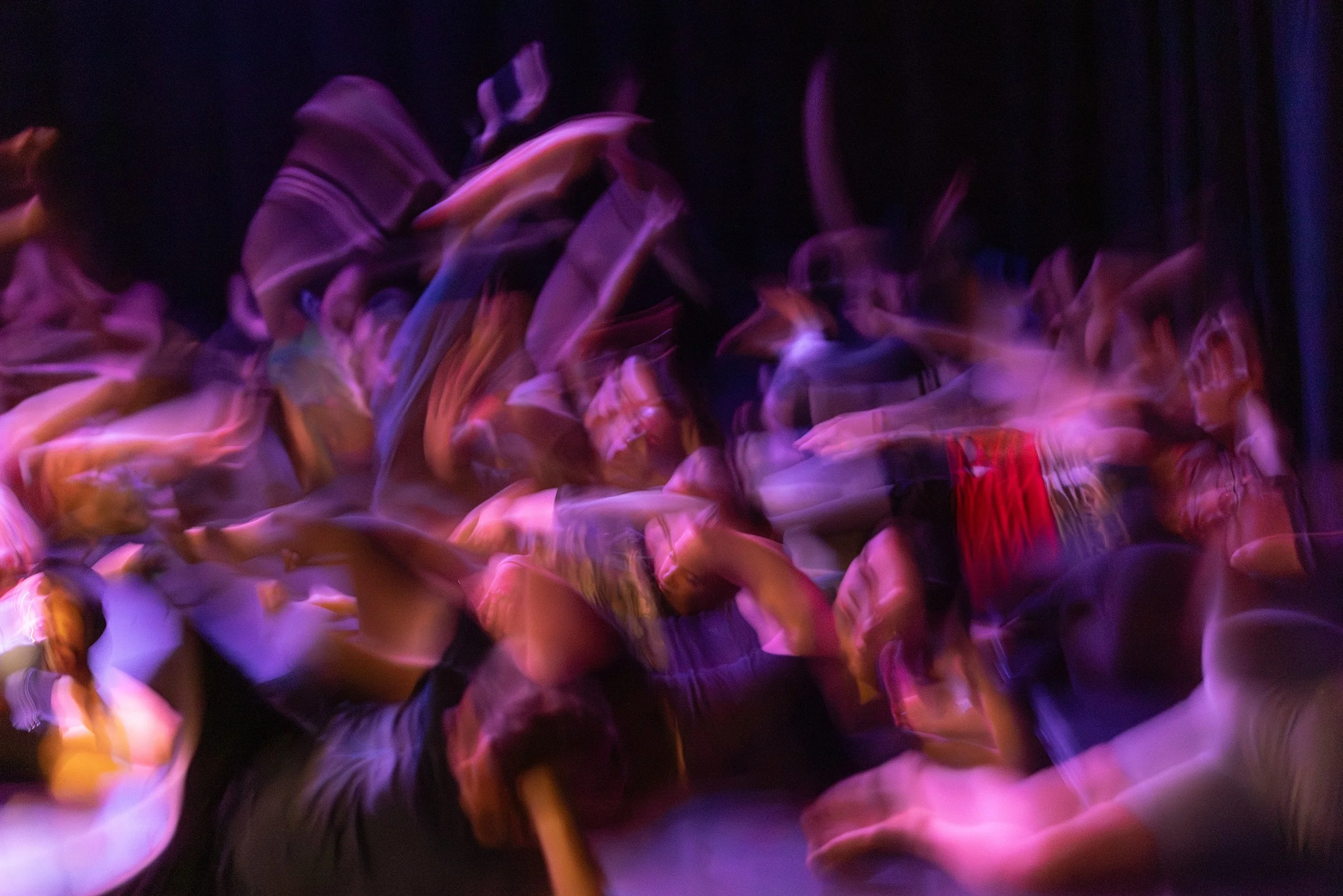
Meghan Jones explores the ecstatic architecture of communal gatherings, documenting the freedom that comes from closing your eyes and letting go. Her photo sculptures capture movement, light, and energy, the images swirling and lifting off the wall like fragments of a dance floor defying gravity.
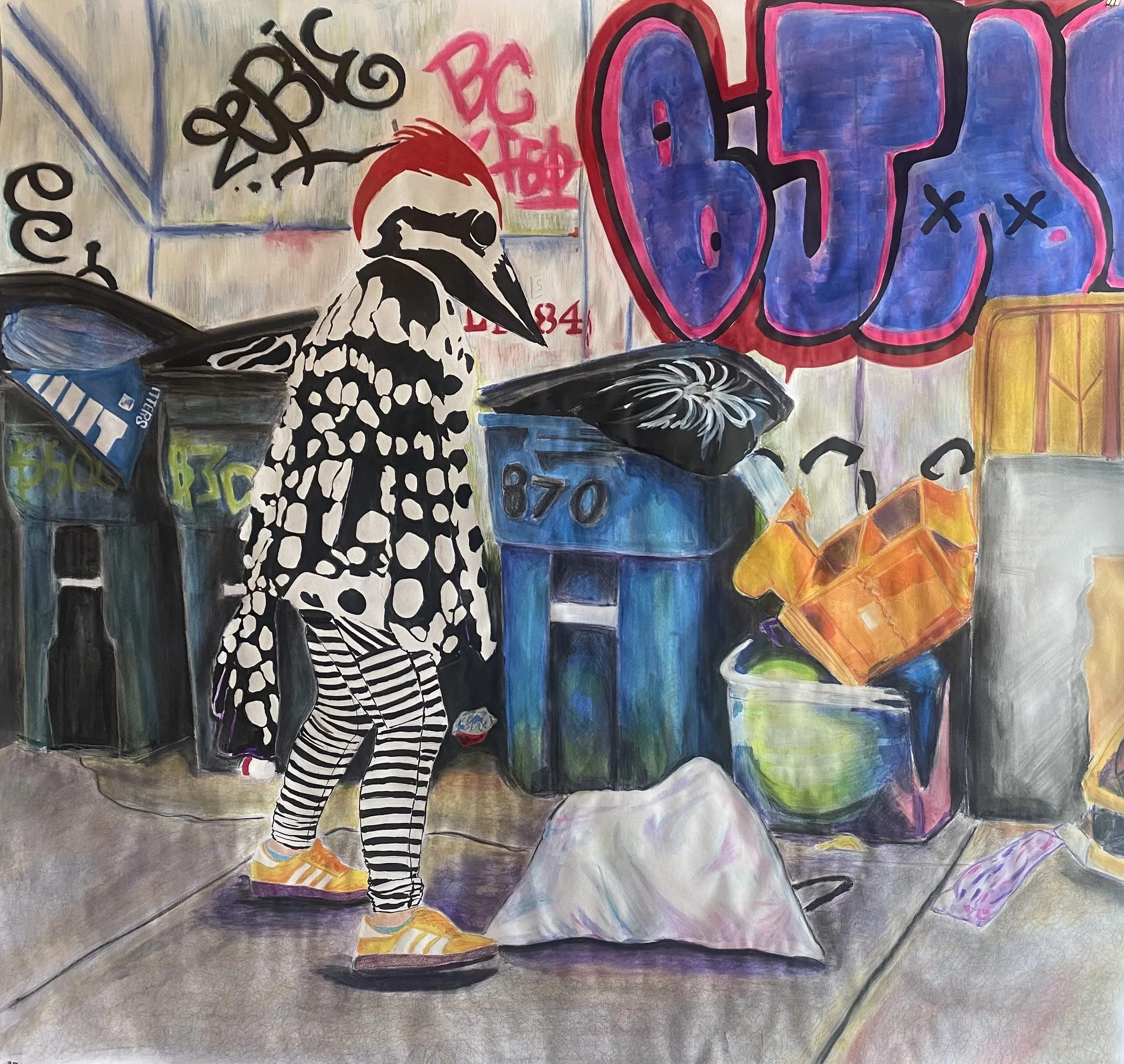
Sarah Parker paints human-bird hybrids navigating fractured landscapes. The figures evoke a modern Horus, the Egyptian deity of healing and protection. A blue hood becomes plumage. Muscled human legs suggest urgency, but beneath the figure’s neon pink sneakers, the earth breaks apart into painterly fragments — orange, brown, black. Eyes line the upper edge of the piece, evoking surveillance and judgment. On one border, repeated, hand-drawn text declares "EVERYTHING FOR EVERYONE." On the other “Who has ACCESS?,” the repetition of words mimicking protest signage. The bird becomes a proxy for human vulnerability in hostile terrain. The illusion of open access is broken. The demand for justice remains.
Together, these works suggest we are living through a comprehensive stress test of every system once assumed stable — political, technological, social, bodily. But What Holds, What Breaks does not offer a manifesto for revolution. Instead, these artists give us, through making, a manual for persistence. The question isn't how to prevent breaking, but how to break well. How can we fragment in ways that make space for what is yet to emerge?
– Jacquelyn Strycker, curator