
MFA Art Practice Second Year Exhibition: In Plain Sight
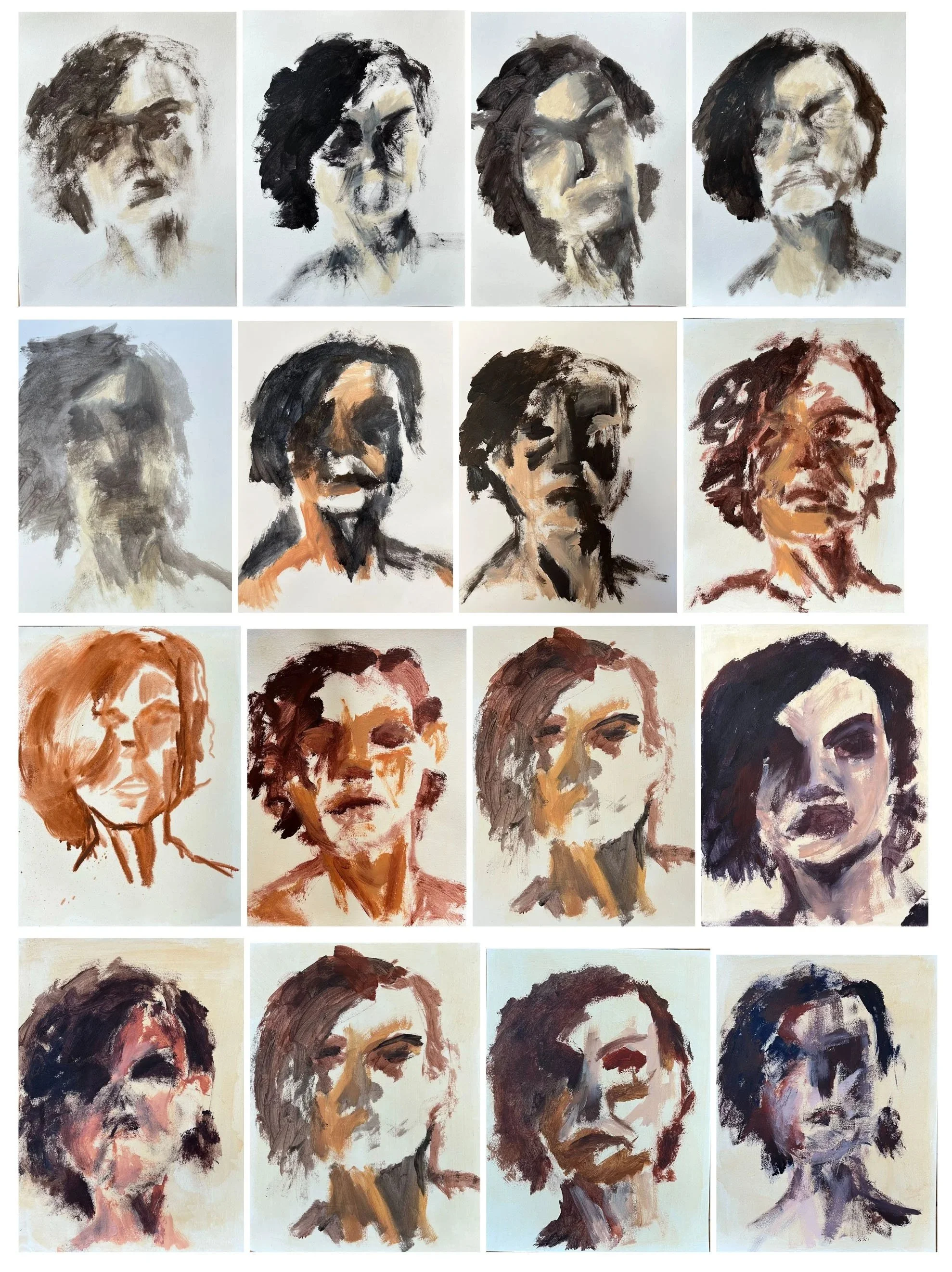
Kim Foster-Yardley, MFA AP ‘27
Thursday, July 9 – Saturday, July 25, 2025
Reception: Thursday, July 9, 2026, 6:00 – 8:00pm
School of Visual Arts (SVA) presents “In Plain Sight,” an exhibition of work by six second-year students in the MFA Art Practice program, curated by faculty member Jacquelyn Strycker. The exhibition will be on view Thursday, July 9, through Saturday, July 25, at the SVA Flatiron Gallery, 133/141 West 21st Street, New York City.
The work on view in “In Plain Sight” examines the political, historical, and inherited power structures that hold bodies in place under the guise of something else. Their works reward a closer look: what reads as traditional, natural, or even beautiful from a distance gives way, on approach, to something more complicated and often more sinister.
Heather Bergerson binds together ordinary objects of domestic life and lets them turn strange. In Bound, two wooden chairs are lashed face-to-face with knotted jute rope into a single almond-shaped opening between them. The piece reads at first as furniture, then as something closer to a body bound upright, while beneath it, eggshells lie broken open. Bergerson's twined fiber vessel extends the same visual vocabulary into a biomorphic form, holding empty space at its center.
Brett Boshco makes work that lives at the threshold of distortion, where it both describes the world and builds a new one. Photographs of the city’s architecture are stretched into vertical bands of smeared color and light, the recognizable world pulled into abstractions that are closer to a textile or a sound wave. Video monitors are wrapped in embroidery thread, letting still and moving images glow through the wound surface. The thread conceals and frames at once, screening the image while insisting on the labor of the hand.
Kim Foster Yardley confronts her own image again and again. Her Quick Self-Portrait Study gathers dozens of rapid, timed paintings made over months as a daily studio exercise, hung together in a dense grid. Across the series, the same face shifts in color, mark, and mood. Painted quickly and repeatedly, the portraits become a record of who she was each day, a daily warm-up that becomes a form of self-examination. An accompanying audio journal turns on the illusion of repair: not a denial that healing is possible, but a refusal of the assumption that the past can be resolved into something whole. Similarly, in her handwoven textiles, she works through imperfections and broken threads rather than correcting them, weaving in rooibos and copper as traces of a lost heritage. Using the Leno weave traditionally used to make gauze, the works leave their wounds visible.
Katie Neylon’s ceramic Milk Jug takes the form of a cow-woman, a figure caught between caretaker and animal, whose body is made to produce, serve, and be poured from. The hybrid form collapses the distance between woman and livestock, making visible the assumption that a female body exists to be used, that her body is valued for what it yields. In a second work, a hyperreal self-portrait, Neylon sets her own melting face on a kiln shelf. The work stages an impossibility: a polymer clay body that cannot be fired rests on the very surface built to endure the heat. The skin slumps. An eye pulls loose from the socket. The self dismantles.
Olga Sidilkovskaya draws on personal and familial archives to examine the machinery of state power. Moving across collage and large-scale painting, her work addresses the way authority cloaks itself in the language of care and tradition—how a monument can look like commemoration and function like control.
Kenzie Sitterud reconceptualizes American success through the lens of the present political moment. A Portrait to the New American Dream is a floor-to-ceiling installation of video, motorized machines, and money that functions as a mock altar to patriarchal governance and the systems that uphold it. In The Man of the Hour, a monochrome letterpress painting reads from across the room as a seductive field of color. Up close, one can read an honorific over and over across the surface, the repeated words building a monument and eroding it in the same gesture. The repetition becomes an unmaking: a word said enough times stops meaning anything, losing all power as it slips into the nonsensical.
Together, these works ask viewers to slow down in front of things they have been taught to pass over—the chair, the photograph, the monument, the familiar face. “In Plain Sight” does not insist on a single reading. Instead, it trusts that attention itself is a form of resistance. Indeed, the longer one looks at the structures shaping society, the harder it becomes to mistake them for natural.
MFA Art Practice is a low-residency, interdisciplinary graduate program that has combined online and in-person learning for over 10 years. A carefully selected, small group of candidates comes together at SVA’s NYC campus for three successive, intensive summer residency periods. In the intervening fall and spring semesters, students engage in required, rich-media online coursework from all over the world. The program’s course of study addresses a wide range of intellectual, aesthetic, technical, and practical concerns. An underlying thread across the curriculum is the ability to situate one’s creative practice within a thoroughly considered social context.
The SVA Flatiron Gallery is open Monday through Saturday, 10:00am – 6:00pm.
The School of Visual Arts has been a leader in the education of artists, designers, and creative professionals for seven decades. With a faculty of distinguished working professionals, a dynamic curriculum, and an emphasis on critical thinking, SVA is a catalyst for innovation and social responsibility. Comprising 6,000 students at its Manhattan campus and over 44,000 alumni from some 130 countries, SVA also represents one of the most influential artistic communities in the world. For information about the College’s 30 undergraduate and graduate degree programs, visit sva.edu.